Restoring
Nature
Beyond soil conditioning, our work extends into land restoration and biodiversity creation. Our schemes focus on returning blighted land to stable, long-term environmental use.
Land Restoration
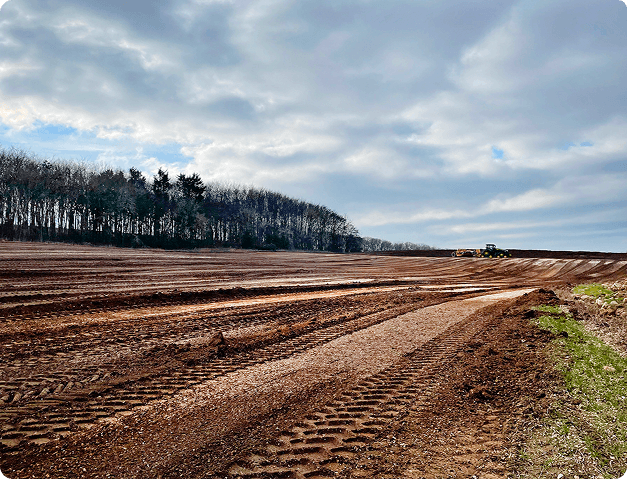
Many former industrial and landfill sites require restoration at the end of their operational life. These landscapes are often left in a degraded or unstable condition, requiring careful design and management to support future use and ecological value.
Allium designs and implements restoration plans that transform blighted land into functioning landscapes and wildlife habitats. Using imported subsoils and soil substitutes, we create soil structures and landscapes aligned to each restoration’s objectives and intended habitats.
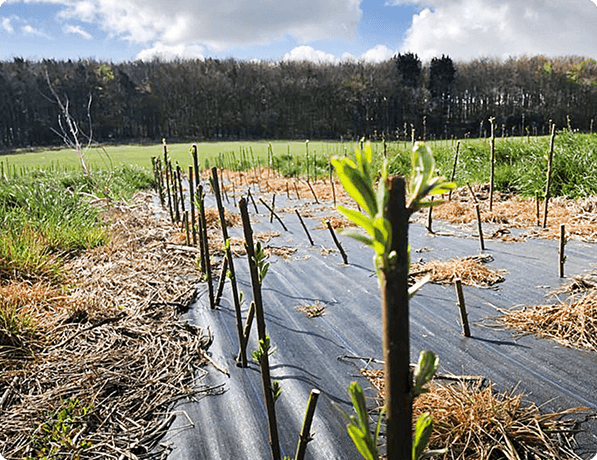
Our work spans the full lifecycle of a scheme – from soil placement to drainage systems, cultivation, planting, and long-term management through Habitat Management and Maintenance Plans.
Within these schemes, Allium places strong emphasis on creating practical, functioning habitats that support wildlife return and ecosystem development, including features such as bat boxes, bird boxes, sand martin habitats, wetlands, and invertebrate-supporting environments designed to encourage rewilding.
Biodiversity Net Gain (BNG)
The Environment Act 2021 introduced BNG, requiring measurable biodiversity improvement as part of land development and restoration. Allium’s restoration schemes are designed to deliver quantifiable habitat creation outcomes.
Habitats delivered through these schemes may include woodland, grassland, mosaic landscapes, hedgerows, water bodies, and drainage features.
Allium manages these schemes for a minimum of 30 years, ensuring long-term ecological performance.
Biomass & Forestry Management
Allium’s biomass division complements our commitment to nature recovery, working with landowners and estates to support responsible woodland, hedgerow, and tree management.
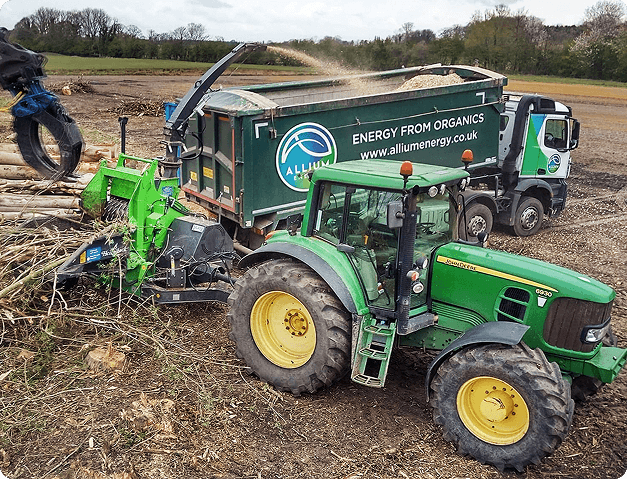
Activities include thinning, brash management, and removal of fallen timber, carried out using low-impact equipment designed to minimise ground disturbance.
Recovered timber and associated materials are processed into biomass fuel, supporting Allium’s internal energy and heat requirements. Our approach prioritises full resource use, ensuring that all material – from larger timber to smaller residues – is put to productive use.
Where appropriate, our forestry work integrates with broader habitat management plans, supported by ecological assessment through our On Nature capability.